
Armenia has one of the oldest wine traditions on the planet. The Areni-1 cave in the Vayots Dzor region holds the remains of a winery dating back more than 6,000 years, which makes it the oldest known winemaking site ever found. That history is not a secret among wine people, but most travelers planning wine tours in Armenia have no idea what a day in the vineyards here actually involves. This article covers the main wine region, the stops worth your time, the producers you are likely to meet, and what to expect when you book a wine tasting tour.
The Areni-1 cave told us something the rest of the wine world spent centuries assuming about other places: people were pressing and fermenting grapes here around 4100 BC, complete with a press, fermentation vats, and storage jars. The country also grows grapes you will not find on a standard tasting menu elsewhere, led by Areni Noir, the indigenous red that defines the region. For most of the 20th century, Soviet policy pushed Armenian production toward brandy rather than table wine, so the modern wine scene is really a rediscovery. That is the short version of why a glass here tastes different in spirit from a polished Napa pour. It is older, far less commercialized, and tied tightly to a specific patch of mountain ground.
Vayots Dzor sits south of Yerevan, roughly 2 to 2.5 hours away by road, and it is the heart of the country’s wine country. The village of Areni is the focal point, partly because of the cave and partly because the surrounding slopes grow the grape that carries its name. Vineyards here climb to high altitudes, which gives the fruit cool nights and strong sun, and the wines tend to show it. You will find two kinds of producers working side by side: larger established wineries with proper tasting rooms and steady output, and small family operations making a few barrels in a converted basement. Knowing that a split helps you read what you are tasting and where it came from.
A good route through Areni mixes the two ends of that range rather than chasing a single “best” name. Established producers such as Areni Winery and Hin Areni give you scale, consistency, and a clear sense of how the region presents itself to the wider market. Smaller boutique cellars offer the opposite gift: access, a winemaker who pours their own bottles, and the kind of conversation you cannot script. Neither is better on its own. The strongest visits pair a larger house for context with a family producer for warmth, so you leave understanding both the industry and the people inside it.
The drive into Vayots Dzor earns its reputation. Red rock gorges open into high green valleys, and the road threads past cliffs that turn copper in late light. The Areni-1 cave sits near Noravank monastery, a 13th-century complex tucked into a narrow canyon that is worth the stop on its own. This scenery is not a side note, because nearly every wine tour here weaves cultural and geological landmarks between the cellars.
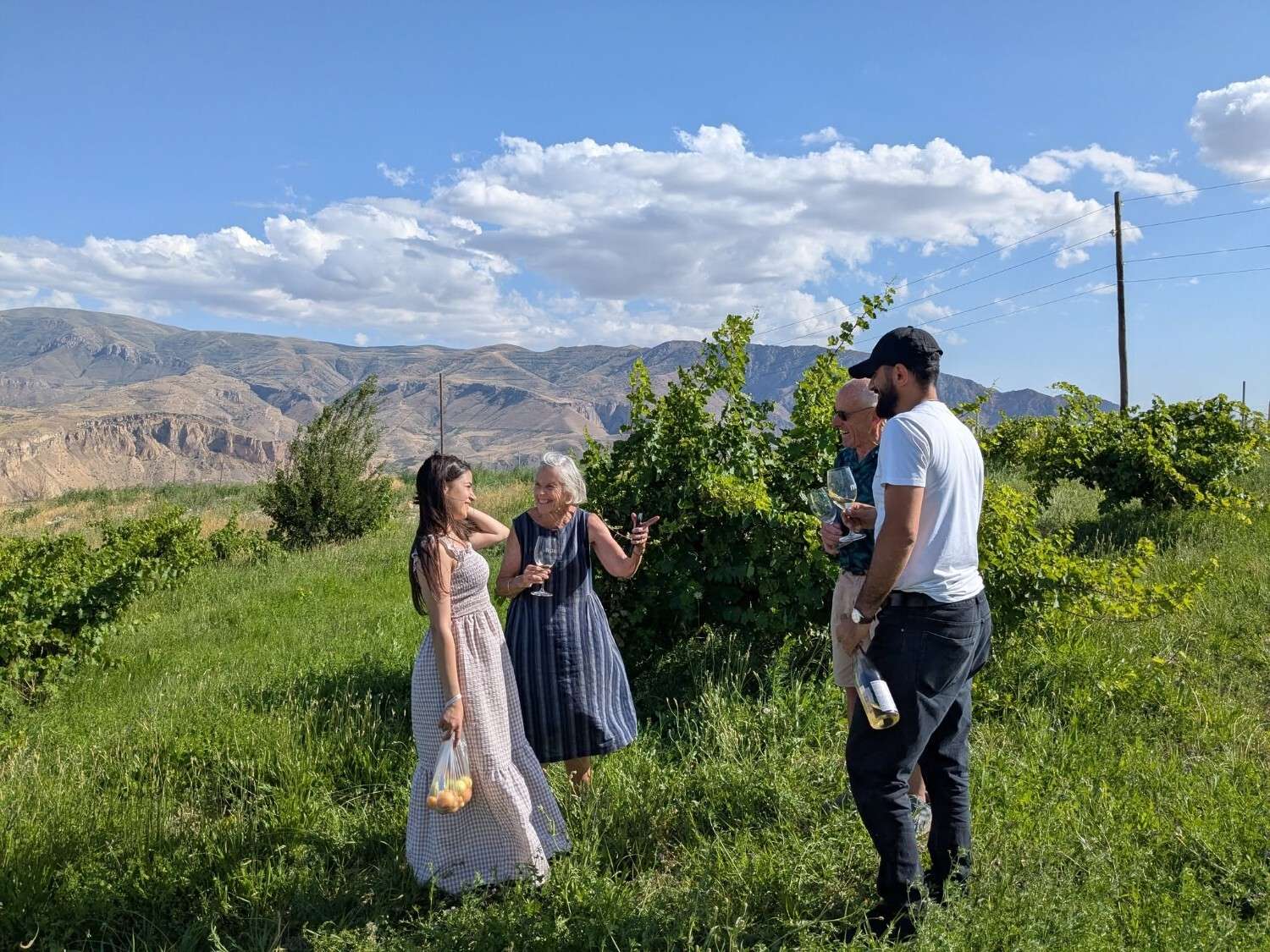
The format is more relaxed and more personal than the wine-train experience many travelers picture. Most wine tasting tours in Armenia run as guided trips out of Yerevan, with the actual tasting handled as a seated, unhurried affair rather than a quick pour at a counter.
A standard day tour leaves Yerevan in the morning and includes a cultural stop on the way south, usually Khor Virap monastery with its view of Mount Ararat or Noravank in its red canyon. From there, you reach Areni for winery visits and tastings, then return to Yerevan by evening. Plan on a full day, typically 8 to 12 hours door to door. Tastings almost always come with food rather than crackers: lavash fresh off the saj, local cheeses, dried fruits, and cured meats laid out on the table. Expect a guided sit-down tasting at a winery table, with someone walking you through each pour, not a rushed walk-through of a production floor.
If you want more than a single day in the cellars, a multi-day trip gives the region room to breathe. The extra time lets you visit more wineries across Vayots Dzor, explore the gorges and monasteries nearby, and slow the pace so the days do not blur into one long drive. It also opens up smaller producers that a tight day tour simply cannot fit. Cascade Travel’s 7-day Armenia wine and food tour is built for exactly this kind of traveler.
The choice between the two changes the texture of the trip more than the price does. A private tour means your party visits wineries at its own pace with a dedicated guide, and you can ask for specific tastings, longer stops, or an extra cellar if the day allows. A fixed-date group tour joins you with other travelers on a set itinerary, which suits solo travelers and couples who want a structured, social experience without arranging a private trip. Both run through Cascade Travel, and both appear in the Armenia wine and food tour packages if you want to compare them side by side.
The difference between a memorable trip and a forgettable one usually comes down to a few things. First, a guide who actually knows Armenian wine, meaning the grapes, the producers, and the history, rather than a driver who simply stops at a winery and waits in the car. Second, a tasting built around food pairing, because Areni Noir and the local whites are meant to sit next to lavash, cheese, and grilled meat, not to be sampled in isolation. Third, real access to family producers, not only the big commercial names, since the small cellars are where the region’s character lives. Finally, a tour that connects the wine to the broader story of the place, linking what is in your glass to the cave, the monasteries, and the mountains around them. When those four line up, Armenia wine tours stop feeling like a tasting and start feeling like an introduction to a country.
The prime window for wine tours in Armenia runs from May through October. Harvest season in September and October is the most rewarding time to come, when the vineyards are busy, and the cellars are full. The Areni Wine Festival, each October, pulls in local winemakers and visitors from across the region for a day of tasting in the village itself. Winter trips are possible, but some of the smaller family wineries operate seasonally, so the range of cellars you can visit narrows once the cold sets in.
Everything above describes how Cascade Travel already runs its trips. Based in Yerevan, the team builds wine into its food and cultural itineraries as a core experience rather than a bolt-on winery stop, which is why the days move at a human pace, and the tastings come with a real meal. That includes a lunch with a local family, an actual home table rather than a restaurant booking, alongside the small-group format and guides who know the region firsthand. The track record backs it up: a 4.9 out of 5 rating on TripAdvisor across 36 reviews, and press coverage from OC Media. If you want a route designed around the cellars and the people behind them, the Signature Armenia Wine Routes tour is the place to start.
You can read what wine tour travelers say about Cascade before you commit, and browse all Armenia travel packages or send an inquiry to start planning.
Armenian wine tourism is still relatively undiscovered, and that is a large part of its appeal. The mix of ancient history, dramatic canyons, and genuine access to the people making the wine sets it apart from the better-known names on the map. For travelers weighing wine tours to Armenia, the country is reason enough to make the trip, not a stopover on the way to somewhere else.