
Tbilisi is a city of carved wooden balconies leaning over sulfur bath domes, Soviet-era apartment blocks standing beside glass towers, and medieval churches sharing streets with natural wine bars. It’s a city that rewards walking and slowing down, since most of what makes it distinctive sits at street level rather than on a checklist. This Tbilisi travel guide covers the neighborhoods worth your time, what to eat and drink, the best sights to visit, what to skip, and how the city fits into a broader Georgia or Armenia and Georgia itinerary.
Two full days is the minimum, enough to cover Old Tbilisi, Abanotubani, and Narikala Fortress with a proper meal in between rather than rushing between sights. Three days allows a slower pace, plus time for a day trip to Mtskheta or the start of a Kakheti wine excursion. Most Armenia and Georgia tour itineraries build in 2-3 nights in Tbilisi, which is the right amount for a first visit. More than four days only makes sense for travelers using the city as a base for multiple day trips, since the city itself doesn’t have four days of sights on its own.
Tbilisi doesn’t need to be seen block by block. A handful of neighborhoods cover the bulk of what a first-time visitor needs, each with its own character and pace.
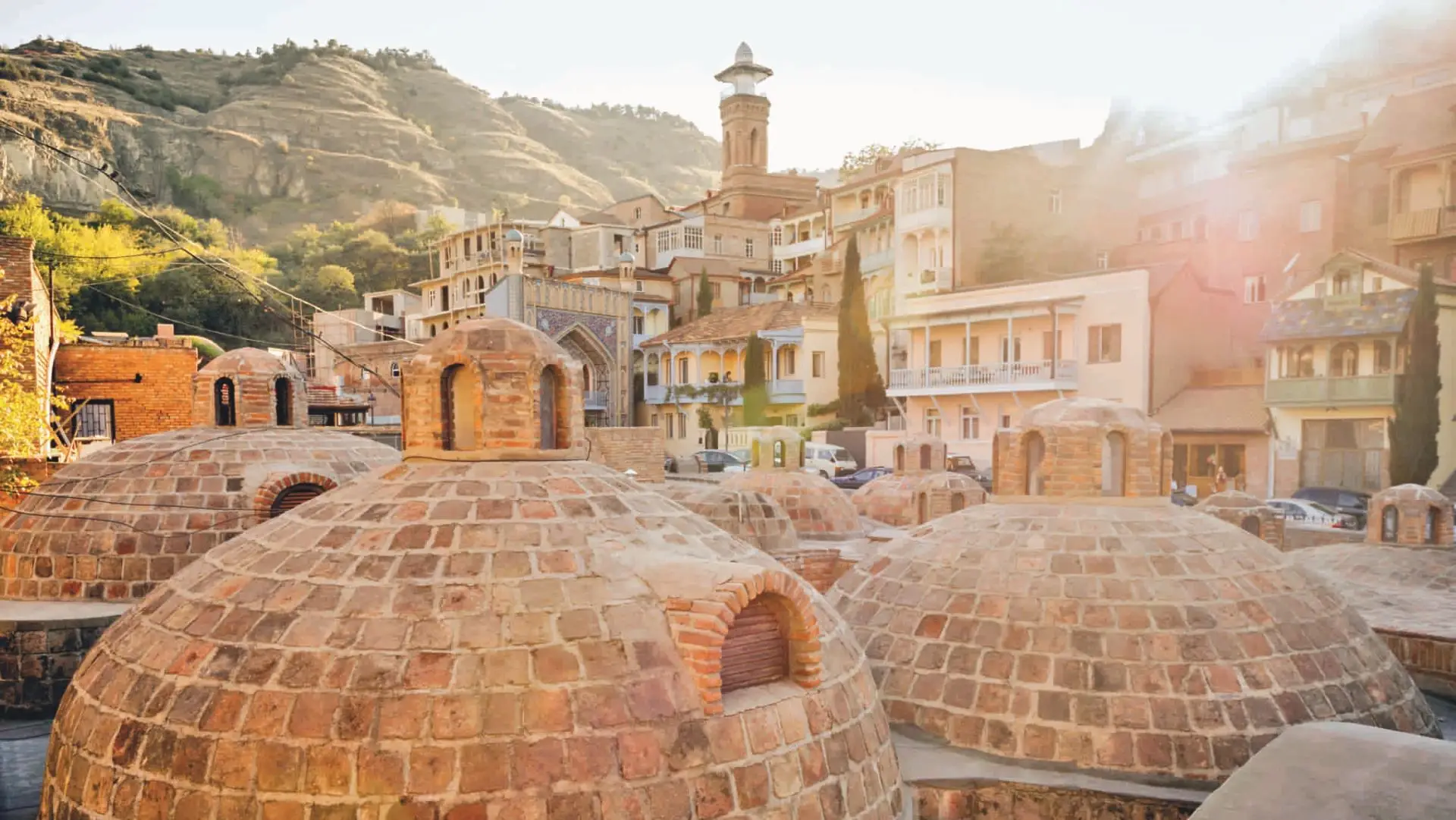
The historic core of the city has cobblestone lanes, carved wooden balconies, churches, and the sulfur bath district, and it’s where most first-time visitors spend the bulk of their time. The sulfur baths are worth booking directly: private rooms can be reserved by the hour, the water is naturally warm and mineral-rich, and it’s one of the more distinctive experiences the city offers. Narikala Fortress sits above this area, reachable by cable car or a walk up, and the view over the old town and the Kura River is worth the climb.
Sololaki is the 19th-century, European-influenced neighborhood of ornate apartment buildings, quiet courtyards, and some of the city’s best natural wine bars and restaurants. Rustaveli Avenue is the main boulevard, lined with grand Soviet-era buildings, the national theatre, and the opera house. It’s worth walking but not lingering on. Political protests have also concentrated here at times, so it’s worth checking current conditions before planning evening activity in the area.
Vera and Vake sit on the western side of the city, quieter and more residential than the old town. Vera has a strong concentration of independent restaurants and wine bars popular with locals. Vake is more upscale and sees fewer tourists. Both are worth knowing for travelers who want to eat and drink away from the Old Town circuit.

Georgian food is one of the main reasons travelers return, and it holds up regardless of where you eat it. This isn’t a cuisine that requires seeking out a specific address, quality is consistent enough that a good meal is more about knowing what to order than where to sit down.
Three dishes deserve a spot on the table during a first visit:
All three show up on nearly every menu in the city and rarely disappoint, even at unremarkable-looking restaurants.
Tbilisi has a strong natural wine bar scene, concentrated in Sololaki and Vera. Look for qvevri wine specifically, a traditional Georgian method that ferments and ages the wine in large clay vessels buried underground. Amber wines stand out in particular, and travelers rarely find them outside Georgia. Most bars pour wine by the glass, and quality stays consistently high even at lower price points. Travelers who want to go deeper into Georgian wine can add Kakheti through Cascade Travel’s Caucasus tours, which include winery visits with a local guide.
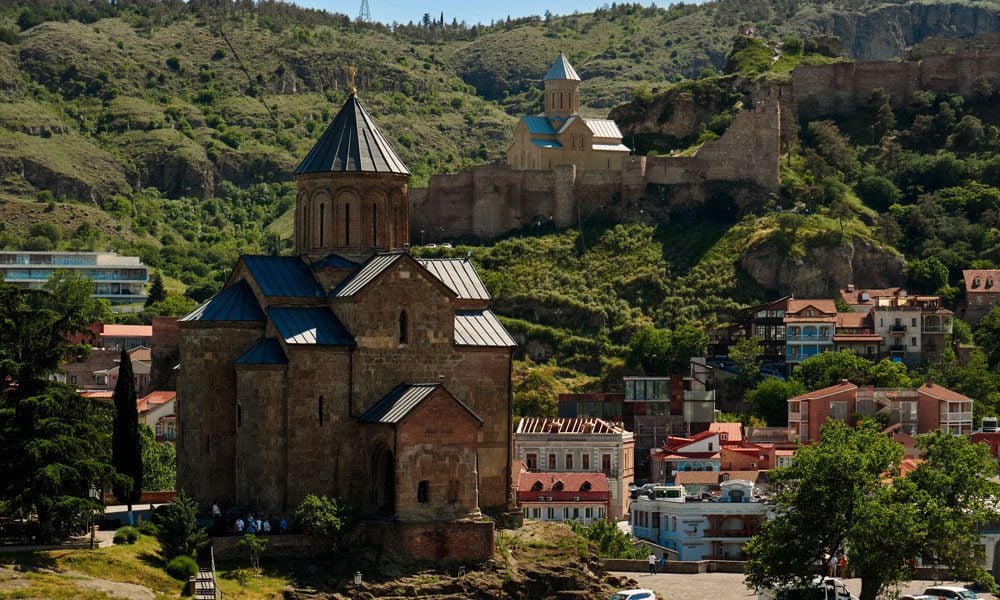
Tbilisi has enough churches, viewpoints, and museums to fill a week, which can make a short visit feel overwhelming before it even starts. So our Tbilisi Georgia travel guide narrows it down to the handful of things worth building a trip around.
A first visit to Tbilisi comes with limited time, so it’s better to leave a few popular options for a second trip and come back to our Georgia Tbilisi travel guide later.
None of these are bad. They just make more sense on a return trip.
With the sights and the food out of the way, here’s the last bit of advice to get your trip off to a smooth start.
Tbilisi works best on foot in the central areas, and most of what a first-time visitor wants to see sits within walking distance of the Old Town. The metro handles longer cross-city journeys well. For taxis, use Bolt rather than hailing a car on the street. Keep in mind that the city is hilly, and some streets involve steep, sustained inclines, a real factor for travelers who prefer a gentler pace.
Spring, from April to June, and autumn, from September to October, offer the best conditions: mild temperatures, smaller crowds than summer, and good weather for day trips to Kakheti or Kazbegi. Summer runs hot and busy. Winter turns cold, but the city empties out and takes on a quieter, more atmospheric feel.
Starting January 2026, Georgia requires travel insurance as a condition of entry. Travelers need to show proof of coverage on arrival, so arranging it before departure avoids any issue at the airport.
Most first-time visitors to Georgia combine it with Armenia, and Tbilisi usually ends up as the first or last major stop on that combined route. Handling both cities and the cross-border journey alone means a lot of logistics to sort out on the fly, hotels, transport, timing the Georgia-Armenia crossing, and figuring out how much time Tbilisi actually deserves. A locally guided trip removes that guesswork. Cascade Travel’s Armenia and Georgia tours include 2-3 nights in Tbilisi with a local guide who knows the city well, planned rather than improvised. Travelers focusing on Georgia alone can browse Georgia tours that use Tbilisi as the main base instead.
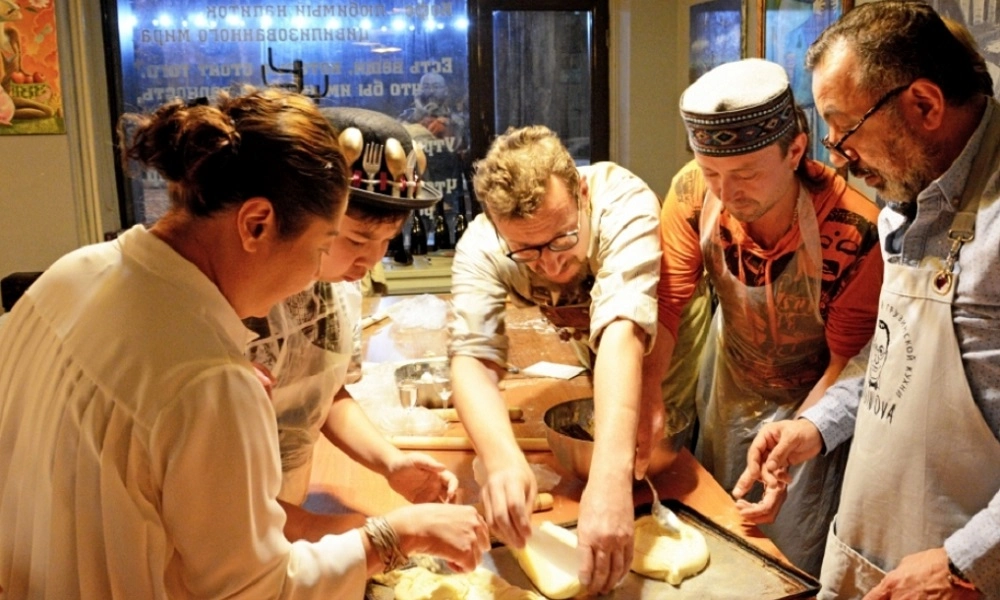
Tbilisi photographs well, but it’s better in person, the texture of the old neighborhoods, the quality of the food and wine, and the warmth of the people all take time to register. Two or three days done well beats a week spent rushing through it. Plan it properly, and it turns into one of the best stops on the trip.