
Kakheti sits in eastern Georgia, roughly two hours from Tbilisi by road, and produces the majority of the country’s wine. It is home to more than 80 indigenous grape varieties and a winemaking tradition that predates most of Europe’s well-known wine regions by thousands of years, which is why any serious look at Georgian wine starts with the Kakheti wine region specifically.
This guide covers the towns worth building a trip around, the grape varieties that define the region, the difference between large commercial wineries and small family producers, what an actual day of tasting looks like, and how to plan a visit that goes beyond a single day trip from Tbilisi.
Kakheti’s wine production centers on the Alazani Valley, a wide, flat stretch of land backed by the Caucasus range, which shields the region from harsh weather and helps give it one of the longest growing seasons in the country. That combination of valley soil and mountain protection is a large part of why vineyards concentrate here.
The region holds both ends of the wine industry side by side: large commercial wineries producing at scale, and small family producers making wine the way their households always have. What separates Kakheti from any wine region in Western Europe isn’t the grapes alone, it’s the qvevri, a large clay vessel buried underground and used to ferment and age wine in contact with its skins. Wineries across the valley still rely on this method today, alongside more conventional production, which is part of what makes the Kakheti wine region distinct.
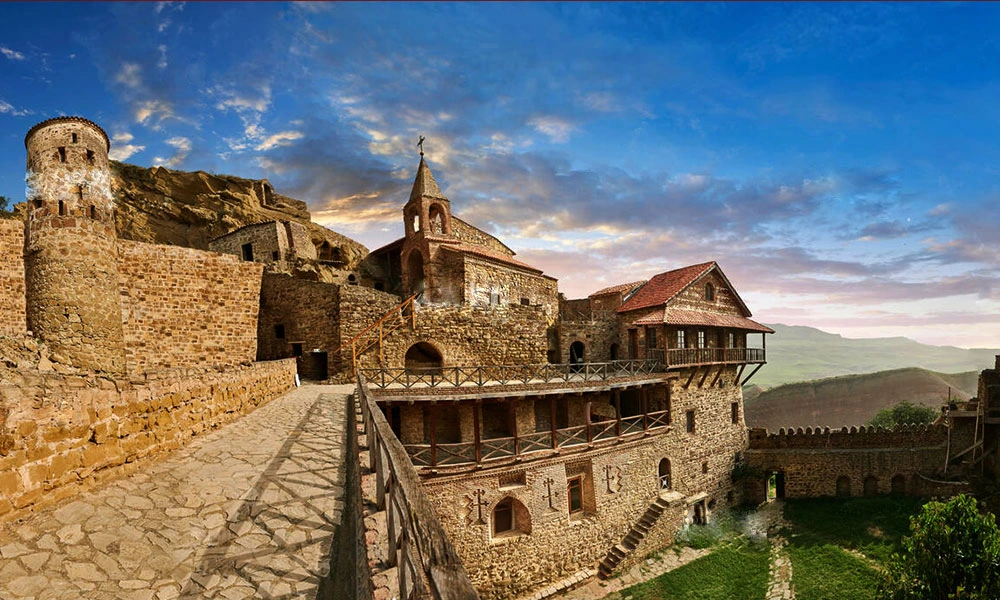
Two grapes define Kakheti wine above all others: Saperavi for red, and Rkatsiteli for white. Between them, and the winemaking method used on either one, they explain most of what a visitor will actually taste in the glass.
Saperavi is the dominant red grape of Kakheti, and one of the few varieties in the world where both the skin and the flesh are dark red. That trait alone gives Saperavi wines their unusually deep color, often closer to black than red in the glass. The result is a tannic wine with notes of dark fruit and spice, built to age. Winemakers produce it in both dry and semi-sweet styles, so it’s worth asking which one you’re being poured before assuming.
Rkatsiteli is the backbone of Kakheti’s white wine production, and the grape splits into two very different wines depending on how it’s handled. Made in the European style, without skin contact, it produces a crisp, high-acid white with little to distinguish it from a mainstream white varietal. Made in qvevri, with extended contact between the juice and the skins, it becomes something else entirely: an amber wine, tannic and dense with dried fruit character. Amber wine, sometimes called orange wine in the West, originated here in Kakheti and is now finding a global audience decades after it fell out of fashion outside Georgia.
Amber wine gets its character from the qvevri method, so it’s worth understanding how that process actually works. Grapes are crushed and fermented with their skins still on, inside a large clay vessel called a qvevri that’s buried underground. Once fermentation finishes, the vessel is sealed and the wine is left to age in that same buried clay, sometimes for months. What comes out doesn’t fit neatly into white or red categories: it has the color of amber, the tannin structure of a light red, and the aromatics of a white.
None of this is a modern winemaking trend. It’s how wine has been made in this part of Georgia for roughly 8,000 years, and the qvevri method is now protected by UNESCO as part of the country’s intangible cultural heritage.
Kakheti wine region wineries cluster around a handful of towns, each with a different role to play in a visit.
Telavi is the main city of Kakheti and the practical base for exploring the region. It has a good range of accommodation, a lively food scene, and sits within easy reach of many of the area’s best wineries, making it a sensible place to stay. In the town center, the Batonis Tsikhe fortress is worth building time into a day for, a former royal residence that gives some sense of Kakheti’s history before wine tourism existed at all.
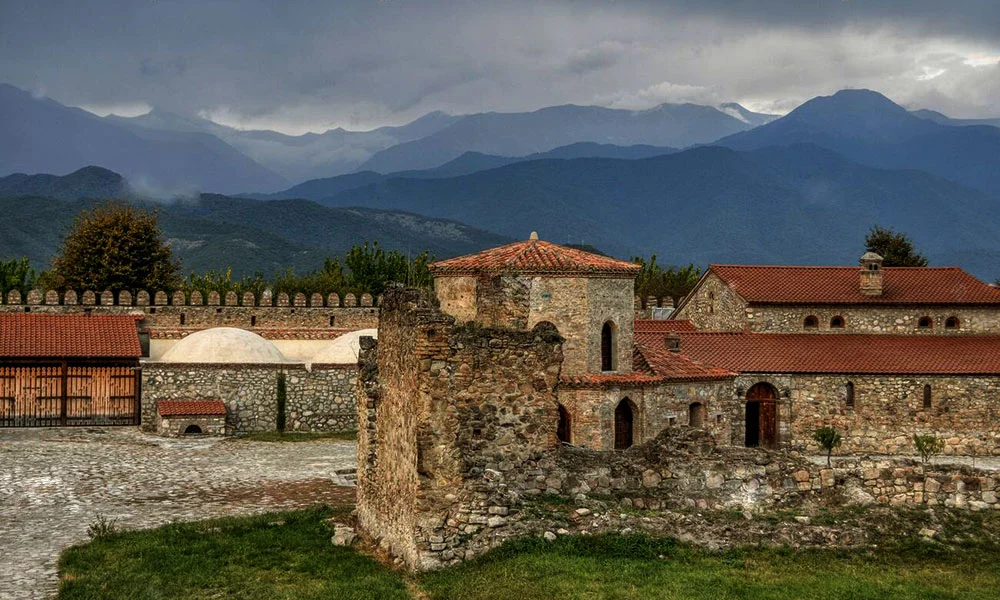
Sighnaghi is the most visited town in Kakheti, a small hilltop settlement with a complete medieval wall still standing around it, cobblestone streets, and views over the Alazani Valley toward the Caucasus. It’s charming, but it’s also the most touristy stop in the region, which shapes how it’s best used. Rather than basing a trip here, it works better as a half-day stop, roughly 30 minutes from Telavi, worth the visit but not the whole picture of Kakheti.
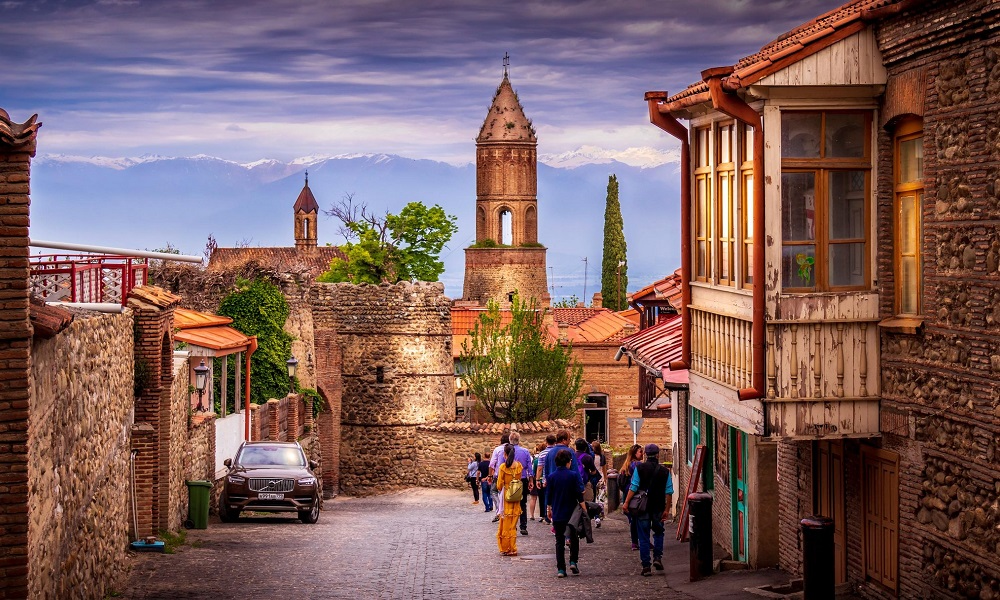
The eastern end of the Alazani Valley, closer to the Azerbaijani border, is home to some of Kakheti’s most respected wine producers, including the Khareba Winery caves, a vast tunnel cellar carved directly into the hillside. The landscape here is flatter and more agricultural, with far less tourist infrastructure than Sighnaghi or Telavi. It’s a stop worth including for travelers who want to see the working side of Kakheti’s wine industry.
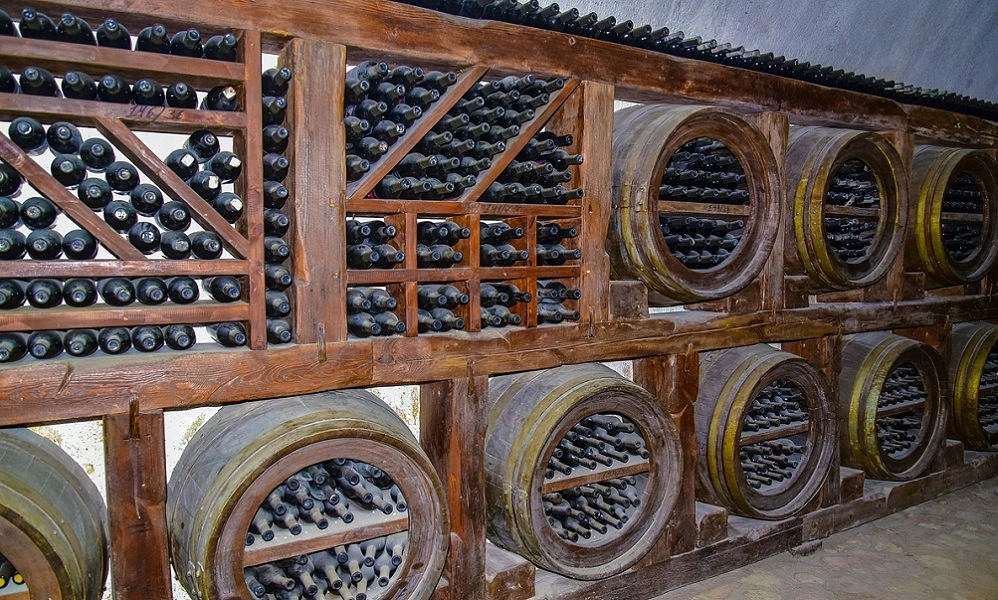
Kakheti region wineries generally fall into two categories. Large commercial operations are best for tourism. Small family producers require more effort to reach, but offer a very different experience.
Places like Khareba, Kindzmarauli, and Shumi cater to tourism. They accept walk-ins without advance planning. Visitors get a structured tour of the facilities, followed by a tasting of three to four wines, usually for a set fee. The experience is informative, but it’s also less personal. These wineries are worth visiting for context and scale.
The most rewarding Kakheti experiences happen at small family producers. But they require advance booking, and often a guide who can communicate in Georgian. These tastings are informal. They often include food and offer access to wines that never leave the region. This is where a guided tour pays off most clearly: a local guide knows which family producers are worth visiting, has existing relationships with them, and can interpret. Cascade Travel’s Caucasus tours offer exactly this kind of access, pre-arranged visits to producers that most travelers would never find on their own.
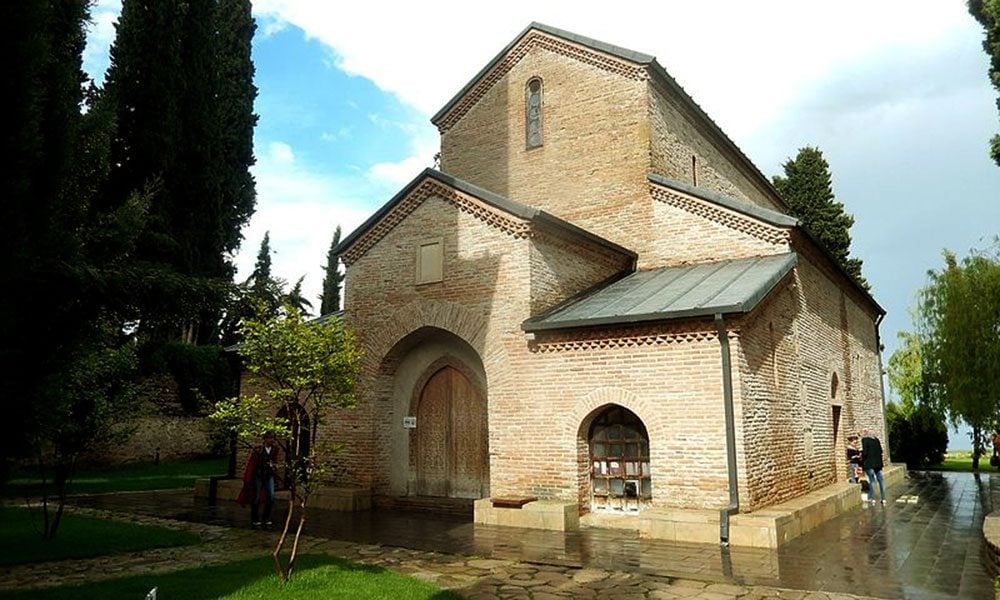
A well-planned day starts with an early departure from Tbilisi. The drive includes a stop at a monastery, usually Alaverdi or Bodbe, before the wine visits begin. A typical itinerary pairs one large winery, for context and scale, with one small family producer, for a more personal tasting. Lunch is built around local food: churchkhela, regional cheese, and fresh bread, often eaten at the same family producer visited earlier in the day. From there, the group either returns to Tbilisi in the evening or stays overnight in Telavi. A two-day version of this trip allows a slower pace and time to reach more of the valley than a single day permits.
Spring, from May to June, brings green landscapes and mild weather, before the summer heat and crowds arrive. Harvest season, called Rtveli, runs from late September into early October and is the most festive time to visit, with some wineries inviting guests to join the grape picking and pressing. Summer is warm and busy. Winter is quiet, with limited hours at smaller wineries. Cascade Travel includes Kakheti as part of its Armenia and Georgia tour itineraries, which run from spring through autumn. Travelers pairing it with Armenia’s own wine region in Vayots Dzor can look at Armenia tours that cover both countries’ wine traditions in a single trip.
Kakheti sits close enough to Armenia that the two make for a single trip. Kakheti’s Georgia wine traditions and Armenia’s own winemaking history both stretch back roughly 8,000 years, and seeing both regions side by side gives a fuller picture of how wine developed across the South Caucasus than either country offers alone.
There’s also a practical reason. A guided tour that covers both countries means the Kakheti section is handled by a local guide with existing winery relationships, not a traveler working out rural Georgian roads and language barriers alone. Cascade Travel’s Armenia and Georgia tours build Kakheti in as a core stop for this reason.
Travelers who want to stay within Georgia can look at Georgia tours that still give Kakheti dedicated time.
Kakheti is easy to visit superficially: a day trip from Tbilisi, a stop at a couple of large wineries, a photo in Sighnaghi. The most rewarding visits happen at smaller producers, over a proper meal, at a pace the region actually deserves. That takes either time or local knowledge, ideally both.