

Many travelers planning a trip to the South Caucasus find Armenia and Georgia side by side on their shortlist. Both are small, welcoming countries with early Christian monasteries, mountain scenery, wine, and family-hosted meals, so it isn’t always clear which one fits your trip. Yet they feel quite different once you’re there. This article covers where Armenia and Georgia differ, which kinds of travelers each country suits, and why most of our travelers end up visiting both in one trip.

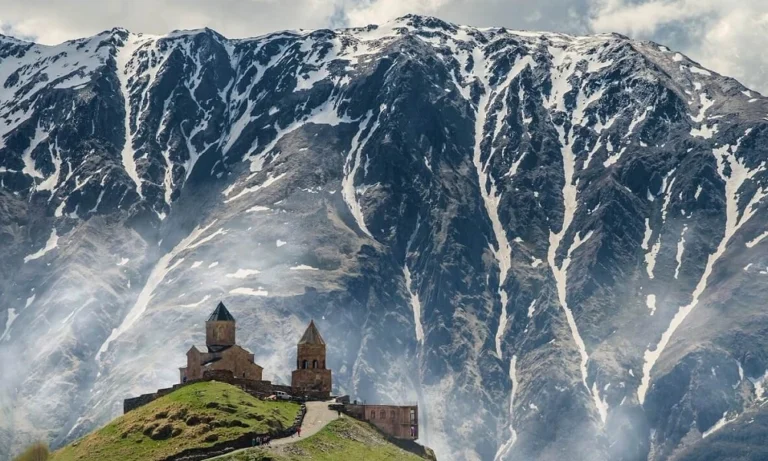
Georgia fits a wide range of landscapes into a small country. On a single trip, you can walk the old streets of Tbilisi, drive the mountain road to Kazbegi below the Greater Caucasus, and spend a day among the vineyards of Kakheti. Farther west are cave cities such as Uplistsikhe and Vardzia, and the Black Sea coast around Batumi.
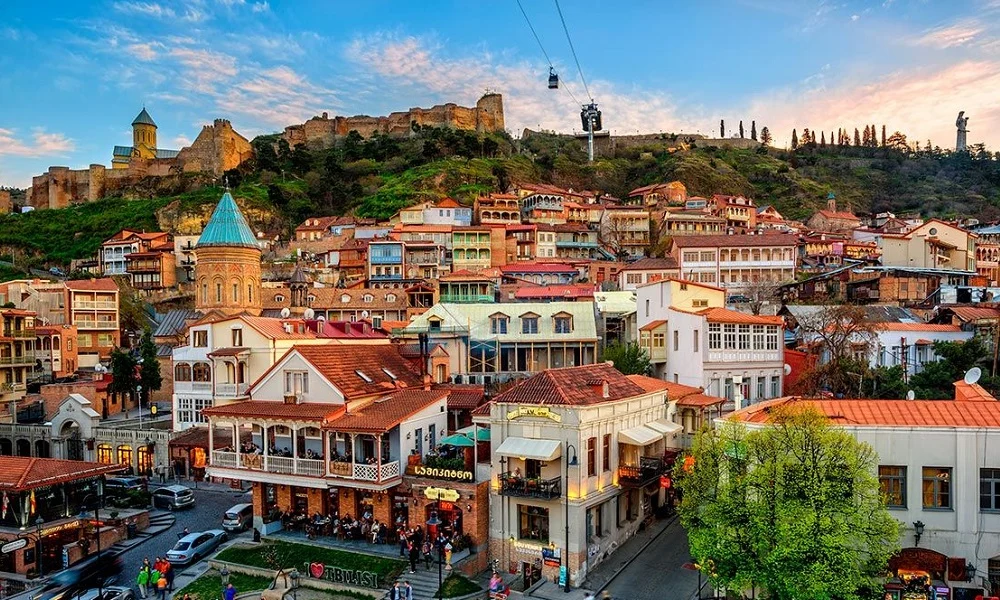
Distances are short, so most days combine a few hours of driving with plenty of time at each stop. Over a week or so, you can move from a capital city to high mountains to wine country without a single internal flight. Tbilisi makes an easy base, with an Old Town of carved wooden balconies and sulfur baths. Evenings are built around restaurants, wine bars, and live music.
Most trips to Georgia run 7 to 11 days. A week covers Tbilisi, Kazbegi, and Kakheti, while our longer Georgia tours add western Georgia at a slower pace.
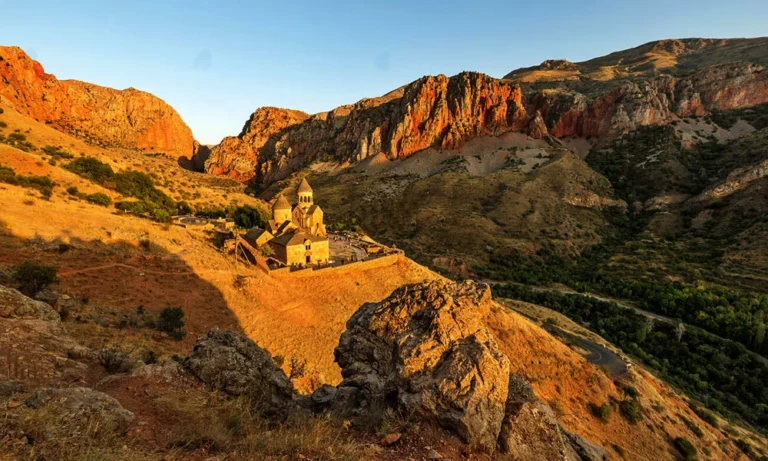
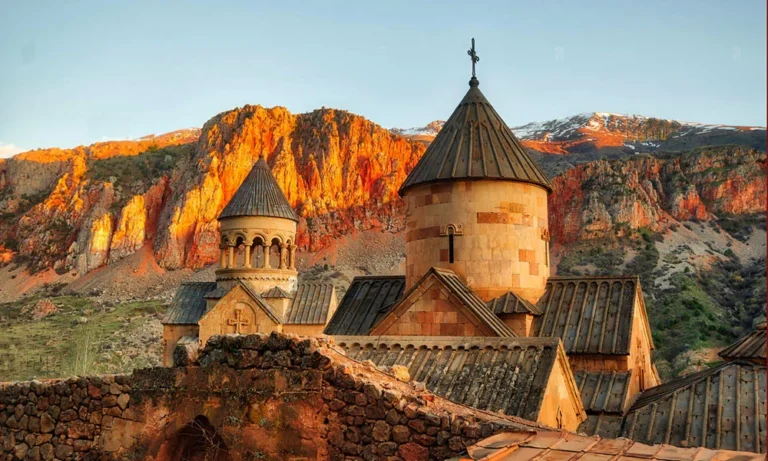
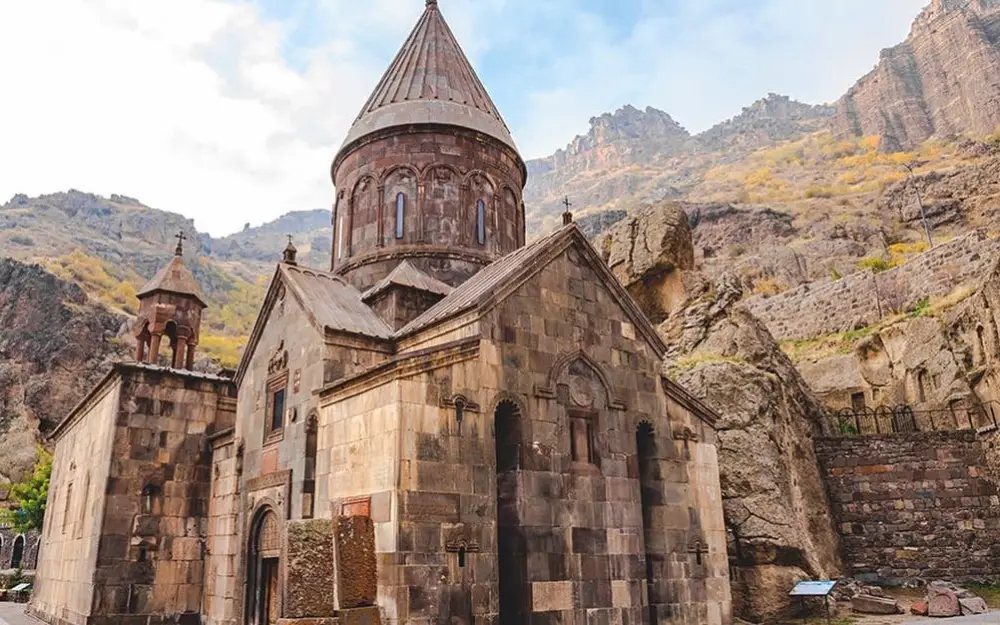
Armenia is a compact country where much of its long history is close to the capital. From Yerevan, you get a view of Mount Ararat, which rises across the border in Turkey. A short drive from the city are Garni, a Greco-Roman temple, and Geghard, a monastery partly carved into the rock. To the south, Noravank stands in a red-rock canyon near the wine villages around Areni. To the northeast, Lake Sevan sits nearly 2,000 meters above sea level.
A trip to Armenia tends to feel quieter, and away from Yerevan, many sites stay calm even in summer. Days lean toward archaeology, early churches, and monasteries, with long lunches at family tables in between. Hospitality is a large part of the experience, and visitors are often welcomed into homes for a meal or a glass of homemade wine.
Most trips to Armenia run 6 to 12 days. A week covers Yerevan, Garni and Geghard, Lake Sevan, and Noravank, while longer Armenia tours take in both the north and south of the country without rushing.
Armenia and Georgia are neighbors with a shared border and some history in common, but they differ in landscape, food, cities, and how easy they are to travel on your own.
Georgia has more variety in its landscapes, while Armenia offers a smaller range in a higher, more rugged setting. In the north of Georgia, the Greater Caucasus rises above 5,000 meters, with Kazbegi the most visited mountain area. The west of the country reaches the subtropical Black Sea coast, and the east opens into the wine valleys of Kakheti.
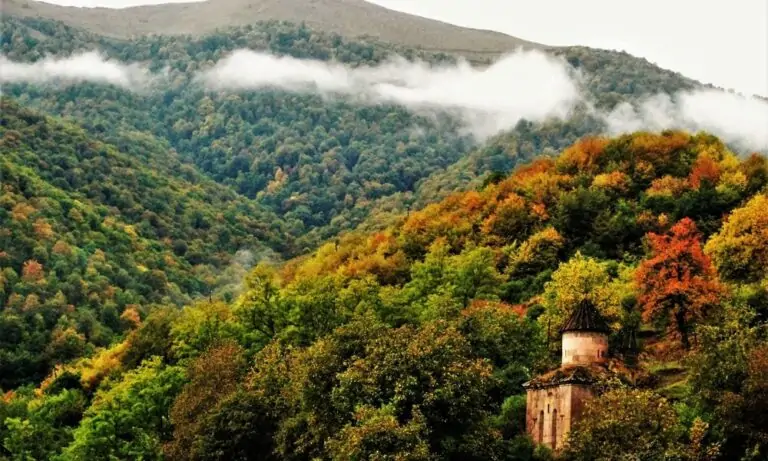
Most of Armenia sits above 1,000 meters. Instead of one dominant range, the scenery is made up of deep canyons, volcanic highland plateaus, and the broad Ararat plain. The closest match to Kazbegi is the Geghama Mountains, a chain of extinct volcanoes above Lake Sevan. In the north, the forested hills around Dilijan are greener and softer than most visitors expect from Armenia.
Planning a trip to Armenia and Georgia?
Tell us your dates and interests, and our team in Yerevan will send you a route and price.
Armenia and Georgia both adopted Christianity in the early 4th century, a few decades apart. Armenia became the first country to make Christianity its state religion in 301, and Etchmiadzin Cathedral is among the oldest cathedrals in the world.
The difference today is mostly in the setting. Many of Armenia’s monasteries stand alone in dramatic places: Geghard is partly cut into a cliff, Noravank sits in a red-rock canyon, and Khor Virap faces the view of Mount Ararat across the border. Georgia’s religious sites vary more in type. They include Jvari on a hilltop above Mtskheta, Svetitskhoveli Cathedral in the center of town, and Vardzia, a 12th-century monastery carved into a cliffside.
Each country has its own alphabet and its own musical tradition. In Georgia, that means polyphonic singing, and in Armenia, it means the duduk.
Georgian food is better known abroad, while Armenian food is often a surprise to first-time visitors. In Georgia, meals center on khinkali dumplings, khachapuri cheese bread, and walnut-based dishes, with churchkhela sold at roadside stalls. Wine is part of daily life there, and the tradition of fermenting it in clay qvevri vessels goes back about 8,000 years.
Armenian meals are built around grilled meat, dolma, fresh herbs, and lavash flatbread baked in a clay oven. Armenia’s wine scene is smaller but growing around Areni, where archaeologists found a winery more than 6,000 years old. Ararat brandy is the national drink.
On our tours in both countries, family lunches and wine tastings are part of the itinerary.

Tbilisi and Yerevan are similar in size but have a different feel. Tbilisi spreads along a river valley, with hills, winding lanes, and a mix of architecture from several centuries. It is busier and more varied from one neighborhood to the next, which suits travelers who want to spend more time in the city.
Yerevan was largely rebuilt in the 20th century, much of it in pink volcanic stone, around a compact center that is easy to cover on foot. Cafe culture runs through the city, with outdoor terraces full from spring to autumn, and evening concerts at the opera house are good value. Yerevan suits travelers who prefer museums, history, and an unhurried pace between days in the countryside.
In a Georgia vs Armenia cost comparison, day-to-day prices are similar and moderate by European standards. A city lunch costs around €10 to €15 in either country, dinner with wine around €20 to €30, and taxis in both capitals are inexpensive. Georgia can be slightly cheaper in some categories, but the difference is small.
On a guided tour, the price depends more on length and hotel category than on the country. Our Georgia tours cost about €1,000 to €2,400 per person, and our Armenia tours cost about €1,200 to €2,400. Some operators charge less. Our prices cover central hotels, small groups, local guides, and included meals and tastings.
Georgia is slightly easier for independent travel, mainly because its tourism infrastructure is more developed outside the capital. Kazbegi and Kakheti have plenty of guesthouses, and trains and shared minibusses called marshrutkas connect the main towns.
Armenia is safe and welcoming, and English is widely spoken in Yerevan. Outside the capital, though, many key sites are in canyons or on hilltops with limited public transport, so you need a car and a driver to reach them easily.
On a guided tour, the difference disappears: transport, hotels, and entrance fees are arranged in both countries.
Neither country is the better choice overall. The right one depends on what you want most from the trip.
If you have 10 days or more, visiting both Armenia and Georgia is usually the simplest way to see the region. The two countries share a land border, so one trip covers both without an extra flight. That is why most of our travelers combine them.
The drive from Tbilisi to Yerevan takes about 5.5 to 7.5 hours, including the border crossing. On a guided tour, it doesn’t feel like a transfer day. The route runs through northern Armenia, with stops at monasteries such as Haghpat along the way. Your guide takes you through the border, and a new local guide and driver meet you on the other side. You can fly into one capital and out of the other, so there’s no backtracking.
The bigger reason to combine them is contrast. After a few days of Georgia’s mountains and busy capital, Armenia’s monasteries and canyon landscapes feel like a different journey rather than more of the same. Each country’s alphabet, food, and wine traditions add to that difference.
A 10- to 13-day trip covers the highlights of both at a comfortable pace, and longer routes add Svaneti or southern Armenia. Our trips to Georgia and Armenia cover both countries in one itinerary, with dates and routes to compare.
Comparing Armenia vs Georgia often leads to the same answer: the two countries are different enough to be worth seeing side by side, and close enough that you don’t have to choose. If one country clearly matches what you want, a single-country trip works well. If not, our trips to Georgia and Armenia cover both countries in one route, without doubling your planning.