
Armenia is one of the oldest continuously inhabited countries in the world. It was the first nation to adopt Christianity as a state religion, its monasteries predate most of Europe’s cathedrals, and its winemaking tradition stretches back more than 6,000 years. It is also small enough to cover meaningfully in a single week, which makes it one of the most rewarding short-trip destinations in this part of the world. This guide covers the things to do in Armenia that are genuinely worth your time: a selective list built around culture, history, food, wine, and landscape, rather than a padded ranking designed to fill a page.
Yerevan is your entry point and the cultural center of the country, and it deserves a day at the front of any itinerary. Three things are worth your time above the rest. The Cascade staircase and the Cafesjian Center for the Arts give you a sculpture collection and a view over the city toward Mount Ararat, and both are free. Republic Square is best in the evening, when the fountains run and the whole city seems to pass through. On weekends, the open-air Vernissage market fills with handmade crafts, old Soviet memorabilia, carpets, and work by local artists, and it is the best place in the country to buy something with a story attached.
Yerevan is also where you should eat Armenian food properly before heading into the regions. Lavash straight from the tonir, dolma wrapped in grape leaves, and khorovats grilled over vine cuttings are all done well here, and the city’s restaurant scene has improved sharply in recent years.
If you are asking “What are the main cultural attractions in Armenia?”, the answer is the monasteries, and four of them are worth building an itinerary around. Each one is distinct in setting, era, and atmosphere, and the order below reflects how they sit geographically rather than how they rank.
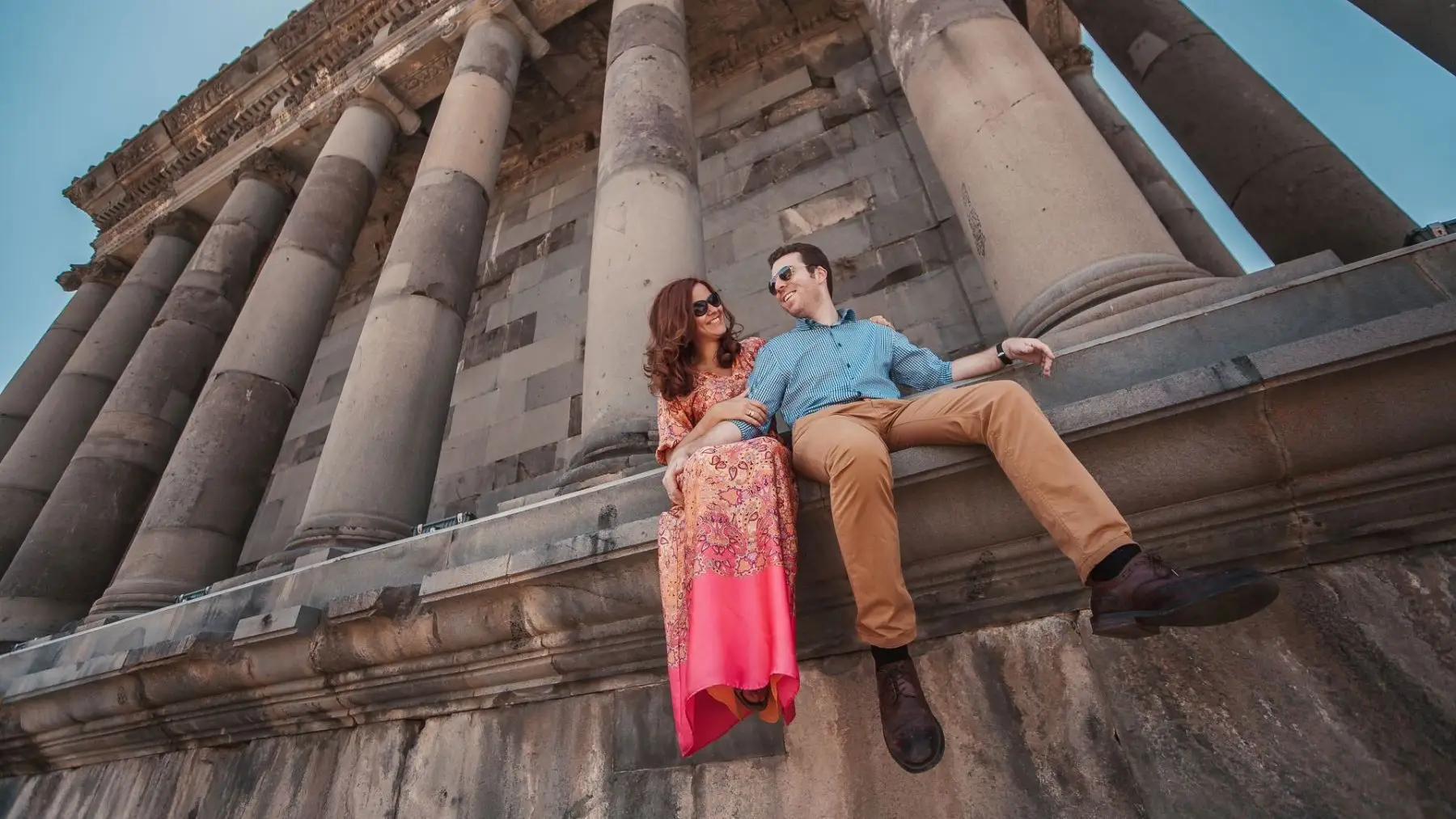
Geghard is a UNESCO World Heritage site carved partly into the cliff face of the Azat River gorge. Several of its chambers are hewn directly out of the rock, with light falling through openings cut in the ceiling, and the acoustics inside are extraordinary, so it is worth pausing if a choir happens to be singing. The monastery takes its name from the spear said to have pierced Christ, which was kept here for centuries. It is usually combined with the Temple of Garni, a first-century pagan temple that is the only surviving Hellenistic structure in Armenia and a reminder of what stood here before the churches did. Both sit about an hour from Yerevan.
Khor Virap is the most photographed monastery in Armenia, and the reason is the backdrop. It sits on a small hill at the base of Mount Ararat, close enough to the Turkish border that the mountain fills the entire horizon on a clear morning. The site marks the pit where Gregory the Illuminator was imprisoned for thirteen years before converting King Tiridates III and setting Armenia on its Christian course in 301 AD. The buildings themselves are relatively modest, and that is worth knowing in advance. You come here for the history and the view of Ararat, not for the architecture. It is about 45 minutes from Yerevan, which makes it an easy first stop on a southbound day.
Noravank is the one most travelers remember. It sits at the end of a narrow gorge of red limestone cliffs in Vayots Dzor, and the approach road alone is worth the drive. The 13th and 14th-century church of St. Astvatsatsin has a narrow external staircase built into its west facade, leading to an upper chapel, and there is nothing else quite like it in the country. The carving on the tympanum is some of the finest surviving medieval Armenian stonework. Most itineraries pair Noravank with a wine tasting in Areni village, which sits just off the highway nearby. Allow about two hours from Yerevan.
Tatev is the most remote of the four and the most dramatic. The 9th-century monastery occupies a basalt plateau high above the Vorotan Gorge in Syunik, in Armenia’s deep south. You reach it on the Wings of Tatev aerial tramway, which, at 5.7 kilometers, is one of the longest reversible cable cars in the world, and the ride across the gorge is a genuine event in itself. The monastery was a major medieval university, and the scale of the complex reflects that. Plan a full day from Yerevan. The drive south is long, but the landscape through Syunik is the best road scenery in the country.
The monasteries are the headline, but the experiences that travelers talk about afterward are usually the ones that involve a table and other people. If you are deciding what to do in Armenia beyond sightseeing, this is where to spend your attention, and it is why the best things to do here are rarely the ones with an entrance ticket.
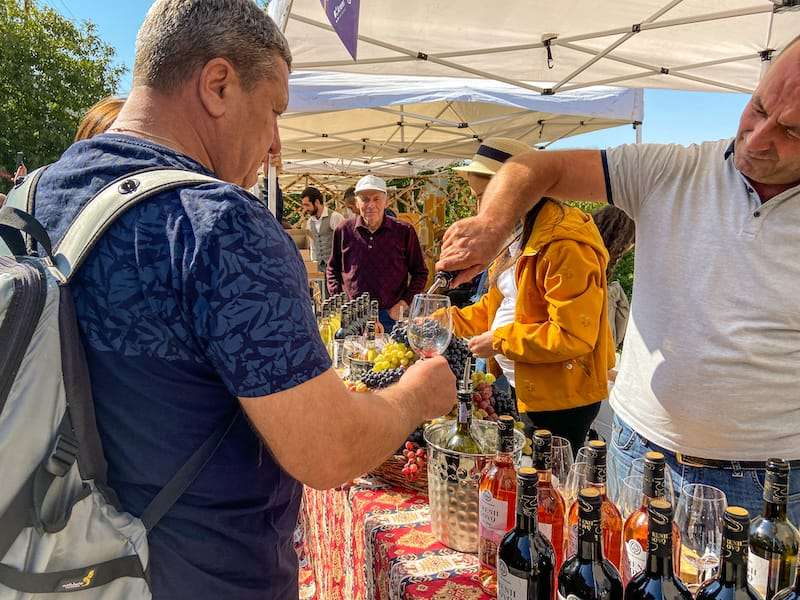
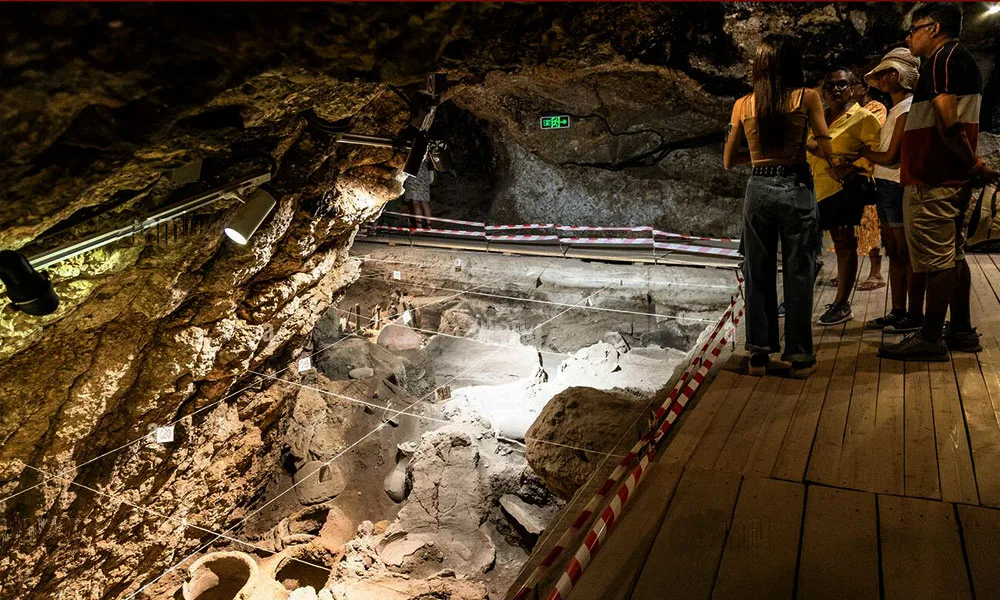
Armenia has one of the oldest winemaking traditions on earth. The Areni-1 cave, a few minutes from the village that gives it its name, contains the remains of a winery dating back roughly 6,100 years, including a press, fermentation vessels, and a clay vat. The Areni Noir grape still produces the region’s dominant red.
A tasting here is not a polished Napa Valley operation. It is more likely to mean sitting at a wooden table in a family winery with cheese, dried fruit, and homemade bread in front of you, listening to someone describe the region they grew up in. That informality is the appeal, and the wine has improved enormously over the past decade.
For a closer look at Armenia’s wine regions and producers, see our guide to wine tours in Armenia.
A family lunch is consistently the most praised experience among travelers who visit Armenia with Cascade Travel. It means a real meal in a private home: multiple dishes prepared from scratch that morning, wine or homemade vodka on the table, and the kind of hospitality that does not come with a script. There is no folk show, no set menu, and no restaurant staff. You sit down with a family that has opened its home to a small group, and you eat for two or three hours. Cascade Travel builds this into its Armenia itineraries as a core part of the trip rather than an optional add-on, because it is often what travelers describe first when they get home.
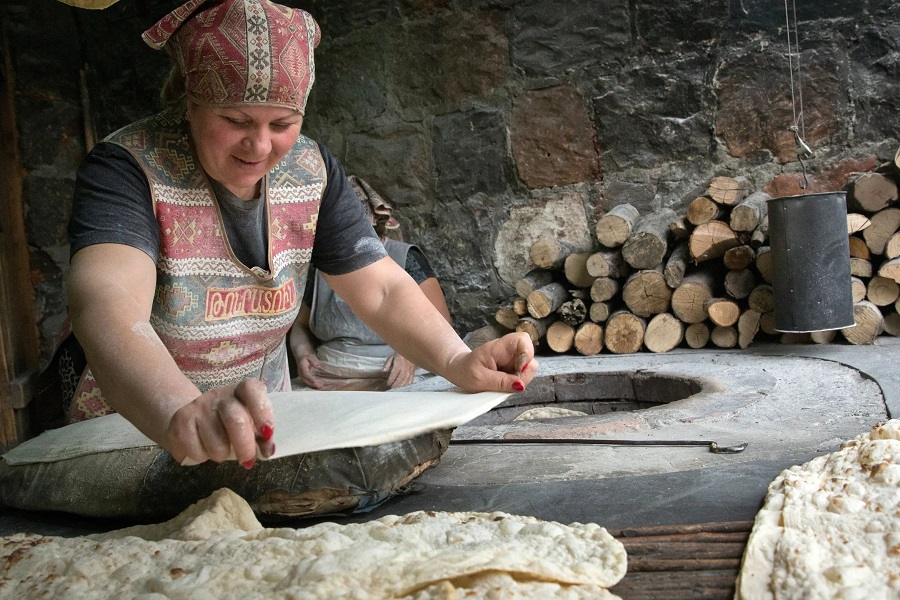
Lavash making is the most common hands-on activity, and for good reason. The bread is a UNESCO Intangible Cultural Heritage item; it takes about an hour to learn, and slapping dough against the wall of a clay tonir is one of those things that is far better done than read about. Some itineraries also include visits to local artisans such as carpet weavers, potters, or brandy producers in Yerevan. These activities earn their place because they put you in direct contact with Armenian culture in a way that walking through monuments, however beautiful, does not.
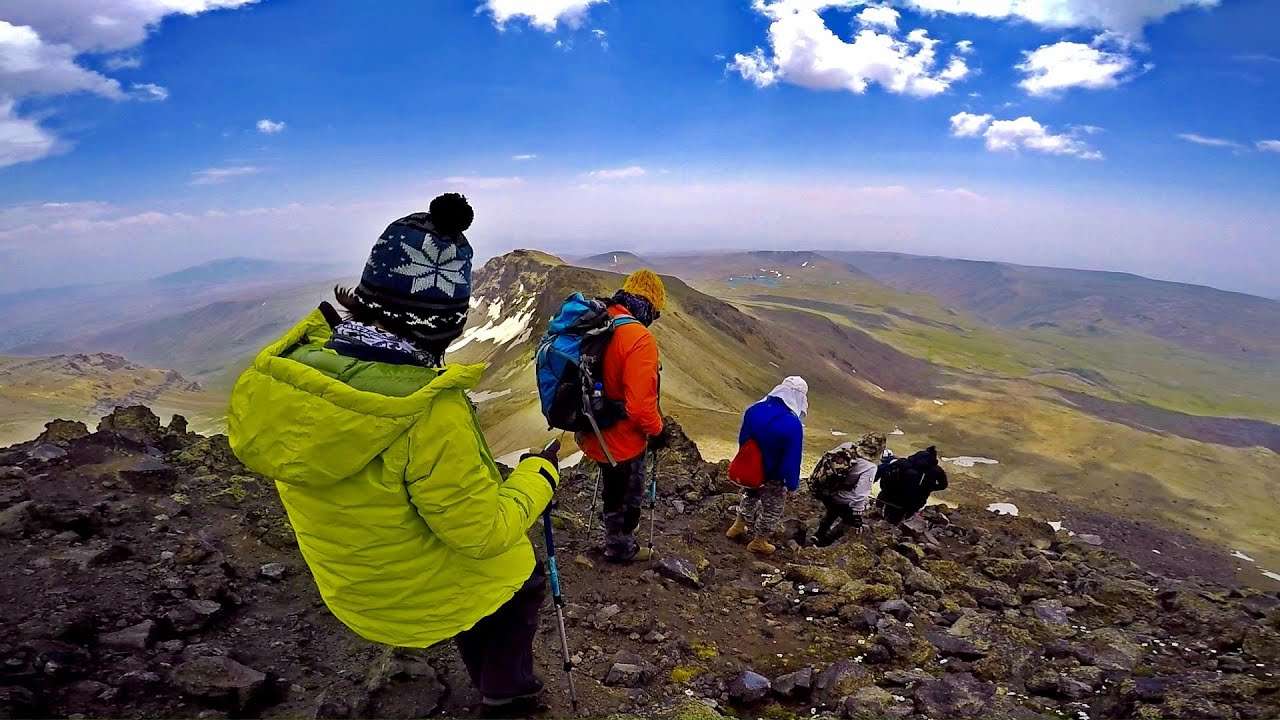
Armenia is mountainous almost everywhere, and its walking has become a serious draw. The three areas below cover very different levels of effort.
Dilijan is often called Armenia’s Switzerland, which undersells how specifically Armenian it feels. The park covers a forested stretch of Tavush Province in northeastern Armenia. The town of Dilijan itself is a 19th-century resort with restored wooden balconied houses along Sharambeyan Street and a slow, cool-summer atmosphere. The full-day walk from Dilijan up through the forest to Haghartsin Monastery is the most pleasant trail in the country for most travelers: shaded, gently graded, and ending at a 13th-century complex in a clearing. No technical experience is needed.
Lake Sevan is the largest body of water in the Caucasus, sitting at 1,900 meters above sea level, and the drive up to it from Yerevan takes about an hour and a half. The Sevanavank monastery, on a peninsula above the water, is worth a short climb for the view back across the lake. Sevan is at its best in late spring and early summer, when the water is clear, and the surrounding hills are still green. In high summer it becomes crowded with domestic holidaymakers. It pairs naturally with Dilijan on a single full-day itinerary heading north.
For travelers who want more than a forest walk, the Gegham highlands east of Yerevan and the Syunik plateau in the south offer multi-day routes across volcanic terrain, past crater lakes, petroglyph fields, and almost no other visitors. These are not casual outings. The terrain is exposed, the weather turns quickly, and there is very little infrastructure, so a guide and proper planning are essential. Cascade Travel’s include hiking-focused itineraries for travelers who want to spend serious time in the mountains.
Knowing the best things to do in Armenia is only half of it. How you string them together decides whether the trip works. Two honest points are worth making before you plan. The first is pace. Armenia rewards a slower itinerary, and trying to compress the country into three days produces a rushed, exhausting trip in which every site blurs into the next. Seven to ten days gives you time to sit down at the long lunches, take the detours, and absorb what you are looking at. The second is access. A locally guided trip opens doors that independent travel generally does not: the family that hosts lunch, the small winery that does not take walk-ins, the guide who knows which mountain track is passable this week, and the logistical support that removes friction in a country where road signage and rural transport can be inconsistent.
That is the approach Cascade Travel’s Armenia tours are built around, and it is worth browsing them to see how the itineraries are structured around the experiences that matter most. Travelers looking to make the most out of their travels can look at trips to Georgia and Armenia for two-country itineraries that cover both destinations with local support throughout.
Armenia does not impress visitors with scale or glamour, and it does not try to. It impresses with depth: the age of the monasteries, the warmth of the people who feed you, the quality of the wine, and the steady sense that you are somewhere genuinely old and genuinely specific. That tends to stay with travelers longer than more visited destinations do.